
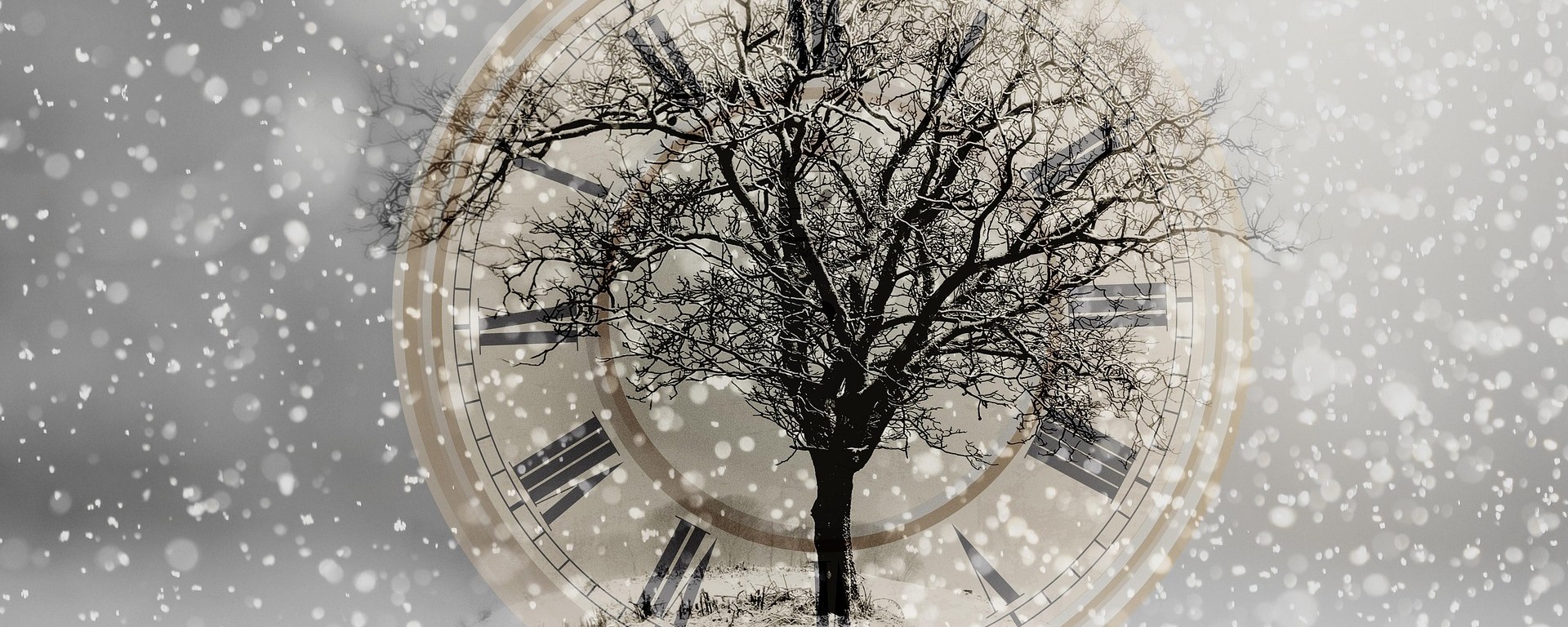
In keeping with the spirit and intention of beginning the new year, I would like to share a beautiful tradition rooted in hope, connection to belief, and the receiving of blessings. Known as The Wishing Tree, this practice appears in cultures around the world. At its heart is the simple act of offering a written wish with the hope that it may be granted, manifested or blessed.
In Japanese culture, the tradition of ema invites individuals to write their wishes on small wooden plaques and place them at shrines or temples, with the belief that this offering may be blessed and bring the seeker’s wish to fruition (Reader, 1991; National Museum of Japanese History). Similarly, in parts of Ireland, people have long embraced variations of the Wishing or Fairy Tree, tying ribbons, cloth, or written notes to branches as a symbolic gesture of planting hope and allowing it to grow into being (Danaher, 1964; National Folklore Collection, UCD).
What unites these traditions is not the promise of certainty, but the act of intention. When we take a moment to write a wish or place it somewhere meaningful, we are doing something quietly powerful. We are clarifying what we hope for and allowing ourselves to hold it with care. Whether understood as spiritual, symbolic, or reflective, these rituals offer a pause and a way to begin the year by listening inward.
Without diminishing the beauty of these traditions, neuroscience offers a complementary perspective on why such practices can feel meaningful and effective. Research suggests that where we focus our attention, our brains tend to follow. When we name an intention and write it down, we engage neural networks involved in attention, planning, and motivation (Gollwitzer, 1999). The act of putting thoughts into words has also been shown to support emotional regulation and cognitive clarity, helping individuals integrate internal experience more effectively (Lieberman et al., 2007). This does not require belief in prayer, magic, or manifestation, only an appreciation that focused intention can shape perception, behavior, and choice over time.
As we move further into the year, traditions like the Wishing Tree remind us that hope does not require certainty. It asks only for attention. Whether understood through spiritual belief, cultural symbolism, or neuroscience, the act of naming an intention matters. When we pause to write what we long for and place it somewhere meaningful, we are practicing alignment between thought, feeling, and action.
In a world that often urges speed, certainty, and outcome, the Wishing Tree offers something quieter. It invites us to slow down, to notice what matters, and to hold our hopes without forcing them into form. Whether your wish takes root visibly or simply reshapes how you move through the days ahead, the act itself has meaning. To name what you long for is to acknowledge your inner life. This, in itself, is a meaningful beginning.
As always, thank you for reading. I look forward to connecting through your writing and mine.
Photo: Pixabay
Copyright Protected Material: © 2020 LaDonna Remy MSW, LICSW. All rights reserved. Written content on this blog (Perspective on Trauma) is the property of the author LaDonna Remy, MSW, LICSW. Any unauthorized use or duplication without written permission of the author/ owner of this web log is prohibited. Excerpts or quotes may be shared in the event the author is fully cited with reference and direction to this blog.
Professional Disclaimer: It is important to recognize that all information contained in the Perspective on Trauma Blog is informational. It is not intended to provide advice, assessment, treatment, or diagnosis. Content is not intended as a substitute for clinical care. It is not possible to provide informed care through web content, or to engage in an informed treatment relationship within this format. If you or a loved one need support; it is important that you access this care from your own (specifically assigned) health care provider.
Agreement of Use: In consideration for your use of and access to the Perspective on Trauma Blog, you agree that LaDonna Remy MSW, LICSW is not liable to you for any action or non-action you may take in reliance upon information from the Perspective on Trauma blog. As noted, it is not possible to provide informed (personalized care) through blog content. In the event, support is needed it is your responsibility to seek care from your own health-care provider.
Resources and References:
Danaher, K. (1964). The year in Ireland. Mercier Press.
Gollwitzer, P. M. (1999). Implementation intentions: Strong effects of simple plans. American Psychologist, 54(7), 493–503. https://doi.org/10.1037/0003-066X.54.7.493
Lieberman, M. D., Eisenberger, N. I., Crockett, M. J., Tom, S. M., Pfeifer, J. H., & Way, B. M. (2007). Putting feelings into words: Affect labeling disrupts amygdala activity in response to affective stimuli. Psychological Science, 18(5), 421–428. https://doi.org/10.1111/j.1467-9280.2007.01916.x
Reader, I. (1991). Religion in contemporary Japan. University of Hawai‘i Press.
National Museum of Japanese History. (n.d.). Ema (votive tablets). National Museum of Japanese History. https://d-museum.kokugakuin.ac.jp/eos/detail/?id=9608 (illustrative example of votive tablets) 國學院大學デジタルミュージアム
National Folklore Collection, University College Dublin. (n.d.). National Folklore Collection. University College Dublin. https://www.ucd.ie/irishfolklore/en/ University College Dublin
National Hotlines:
The National Domestic Violence Helpline: (1-800-799-SAFE 7233)
The National Domestic Violence Chatline. http://www.TheHotLine.org
Treatment Referral Helpline: (1-877-726-4727)
National Suicide Prevention Lifeline: (1-800-273-8255)
The Hotline. (n.d.). Abuse defined. National Domestic Violence Hotline. https://www.thehotline.org/identify-abuse/
Counseling Resources:
ALMA: https://helloalma.com/
Better Help: https://www.betterhelp.com/
Psychology Today: https://www.psychologytoday.com/us
Talk Space: https://www.talkspace
 Perspective on Trauma
Thanks for this, LaDonna. I think this is why writing, in general, can be therapeutic, perhaps? It’s like you’re literally creating new neural pathways by clearing out old ones, or something like that lol I’m not a clinician, so forgive my explanation.
LikeLiked by 2 people
Thank you, KE. I agree. Writing is powerful tool. It can be incredibly therapeutic and clarifying. ❤️
And yes, we do literally create those new pathways through repetition.
I always appreciate you and your thoughts and insights.
Have a wonderful start to 2026.
LikeLiked by 2 people
Same to you 🥳
LikeLiked by 1 person
This is wonderful and grounding. A gentle, hopeful way to begin the year.
LikeLiked by 2 people
Thank you, Willie. ❤️ I genuinely appreciate your words. And am sending you lots of good wishes as you and your loved ones begin 2026.
LikeLiked by 2 people
You are very welcome… And Thank you so much…
Happy and Blessed New Year 2026
LikeLiked by 2 people
❤️❤️
LikeLiked by 2 people
I love the idea of a wishing tree and have heard of this Japanese tradition. Good to learn more about the different cultural variations.
What I love about your post is that you highlight how faith and science can be interconnected and not necessarily mutually exclusive. Both mindsets and approaches to life can work in harmony. Something I strongly believe in.
Wishing you a slow and hopeful start to the new year, LaDonna! 😊
LikeLiked by 2 people
Thank you, Ab. We truly do have multilayered and simultaneous truths. ❤️
I wish you and your family a beautiful and peaceful year ahead. ❤️
LikeLiked by 2 people
A beautifully grounded reflection to begin the year, LaDonna. Thank you for introducing this tradition of the Wishing Tree. The idea that writing our wishes is less about guaranteeing outcomes and more about aligning attention, emotion, and action is worth thinking about. Wishing you a slow, spacious, and gently hopeful 2026.
LikeLiked by 2 people
A super-sweet tradition, LaDonna. Thanks for sharing this.
LikeLiked by 2 people
Yes, writing is powerful. The idea of a wishing tree is superb.
LikeLiked by 2 people
Thank you, KK. Have a wonderful weekend ❤️
LikeLiked by 2 people
Happy Sunday, LaDonna!🎊
LikeLiked by 2 people
🩷
LikeLiked by 2 people
Love this idea of the practice of the Wishing Tree LaDonna! 🌳 This is indeed a multilayered tradtion that can be carried out every day of the year my friend. Thanks so much for sharing this time-honored cultural practice! 😊💖🦋
LikeLiked by 3 people
Thank you, Kym. It really is lovely. I love the idea of using it everyday 🩷.
LikeLiked by 2 people
I couldn’t agree with you more LaDonna. Thank you for sharing my friend. 🥰🙏🏽😍
LikeLiked by 1 person